
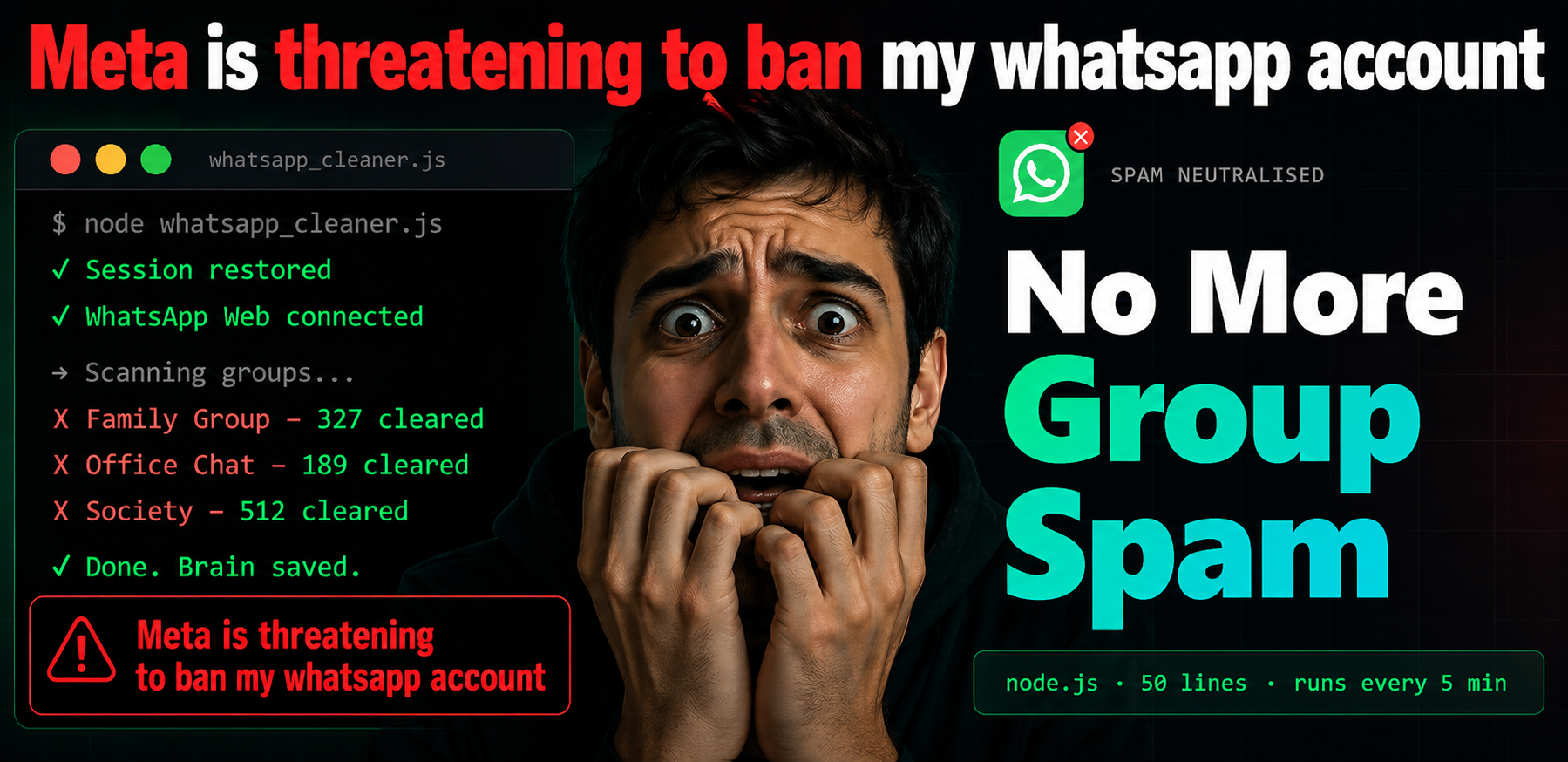
The WhatsApp Problem: How I Automated My Way Out of Digital Chaos
WhatsApp was supposed to be a utopia.
When it first launched, it promised to democratize communication. It was the tool that finally cut the cord from expensive telcos and mind-numbingly complicated international calling plans. It allowed us to span the globe, reconnect with lost friends, and share birthday wishes without the friction of traditional mail. It was text, pictures, voice—a perfect, free, 24/7 lifeline.
But like all good things, it had an expiry date.
The introduction of “Groups” unleashed a different kind of reality. What started as a tool for seamless connection quickly devolved into a cesspool of misinformation, mindless conspiracy theories, silly memes, and dangerous rumors.
The Cost of Being “Connected”
For the past few years, I found myself totally consumed. Every morning, I woke up to hundreds of messages across a dozen groups.
The math is grim: I can guarantee 99% of those messages were absolute garbage. Some were engineered to elicit anger; others were unproven medical “cures” or toxic political bait. I’m naturally opinionated, so I’d take the bait—time and time again. I’d argue, I’d provide counterpoints, I’d link to proof.
Little did I realize how futile those attempts were.
On top of the friction, we now have the “AI slop” era. Every day, the feed is flooded with low-quality, AI-generated nonsense that anyone with a 50 IQ should recognize as fake. And the “friends” groups? They became little more than vanity fairs—arenas for people to flaunt wealth, success, or moral superiority. It was the human race’s worst attributes, on steroids.
The Breaking Point
This constant barrage began to take a real toll on my mental health. My work suffered. My personal life felt cluttered. I was wasting hours engaging with people who didn’t deserve my attention and consuming information I knew to be false.
I needed an exit strategy.
At first, I tried manual discipline. I’d wake up, clear all my notifications, and move on. But curiosity is a trap. I’d occasionally fall for clickbait, go down a rabbit hole, and lose an hour of my day. I wanted to leave the groups entirely, but I didn’t want to offend anyone or appear “snooty.”
The Solution: A Technical Intervention
If one piece of technology created the problem, another piece could fix it.
I wrote a simple script. It runs on my laptop and scans my specified WhatsApp groups every five minutes, automatically clearing the messages before I ever have a chance to glance at them.
The results have been nothing short of transformative:
- Increased Focus: No more context switching. My deep work sessions for my editing and blogging are actually deep.
- Stable Mind: By removing the “variable reward” of notifications, the anxiety of “what’s happening in the chat” has evaporated.
- Time Regained: Hours of my day are back in my control.
Life has a way of evening itself out if you have the right motivation and the right tools.

Try It Yourself
I’ve decided to open-source the solution. You can Download the Code from GitHub and run it on your own machine.
Test it for a week. See if it has the same impact on your focus and well-being. And if you have other ways of handling the noise of modern social media, let me know in the comments. I’m always looking for better ways to stay sane in a digital world.


This is really helpful, looking forward to try this out and will share my thoughts.